Launch offer — valid today only

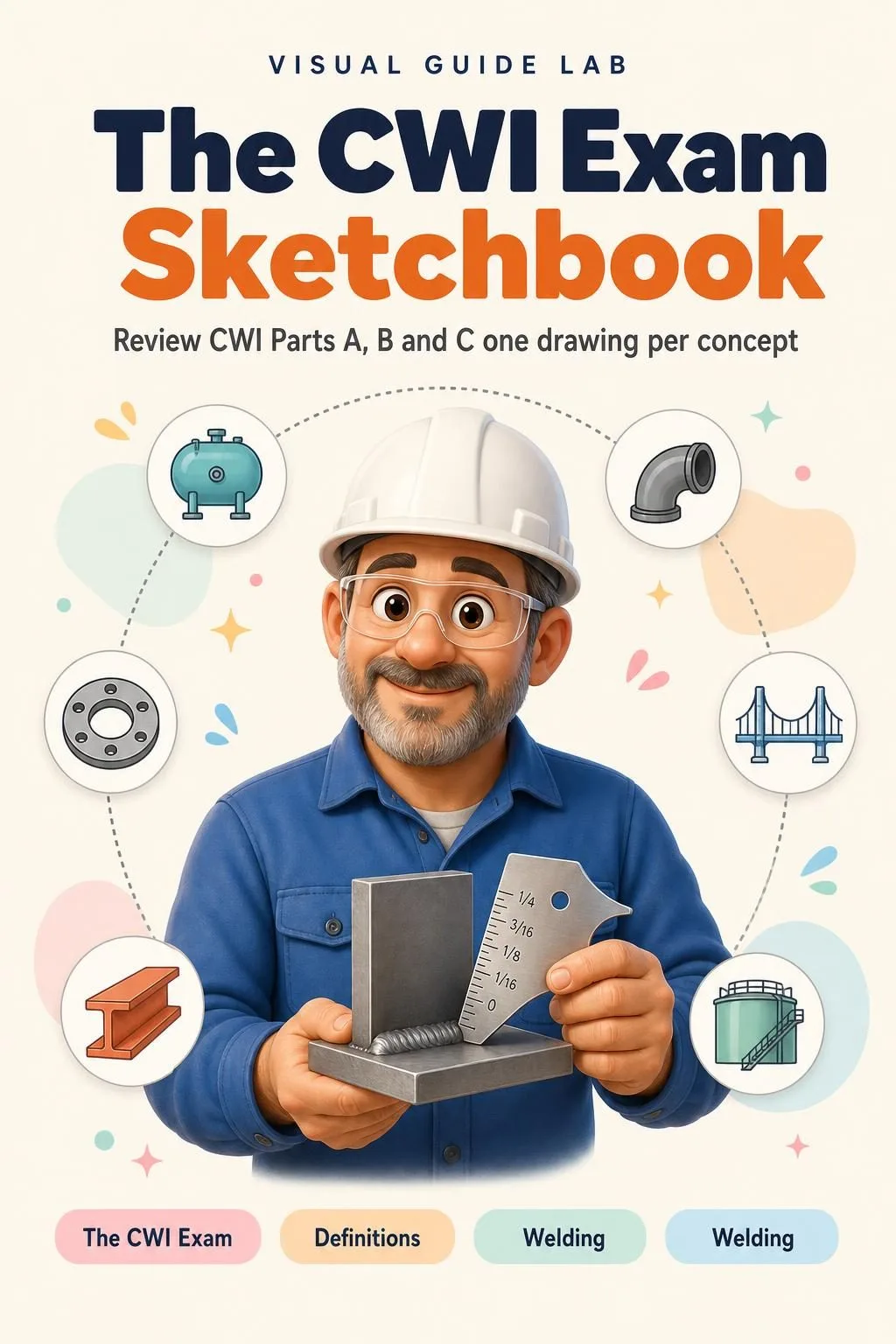
Review CWI Parts A, B and C One Drawn Page at a Time With Every Concept Drawn Step by Step!

Joint types, fillet and groove welds, 1G-4G positions, welding symbols, discontinuities, NDE methods, WPS and PQR, and Part B gauges: in your notes it's a wall of text. Here every topic fits on one page, with the drawing and what you need to remember. 65 illustrated pages.

I WANT TO STUDY IT WITH DRAWINGS

🔒 Secure checkout · PDF by email · 30-day guarantee

One topic per pagethe drawing shows you the concept and the text walks you through it
65 illustrated pages11 parts, from how the exam works to the exam day checklist
Up-to-date sourcesAWS CWI exam guides, the Part B Book of Specifications and OSHA 29 CFR 1910

This Is What the Pages You Will Study Look Like

One topic per page, with a drawing that shows you how it looks and boxes with what you need to know:

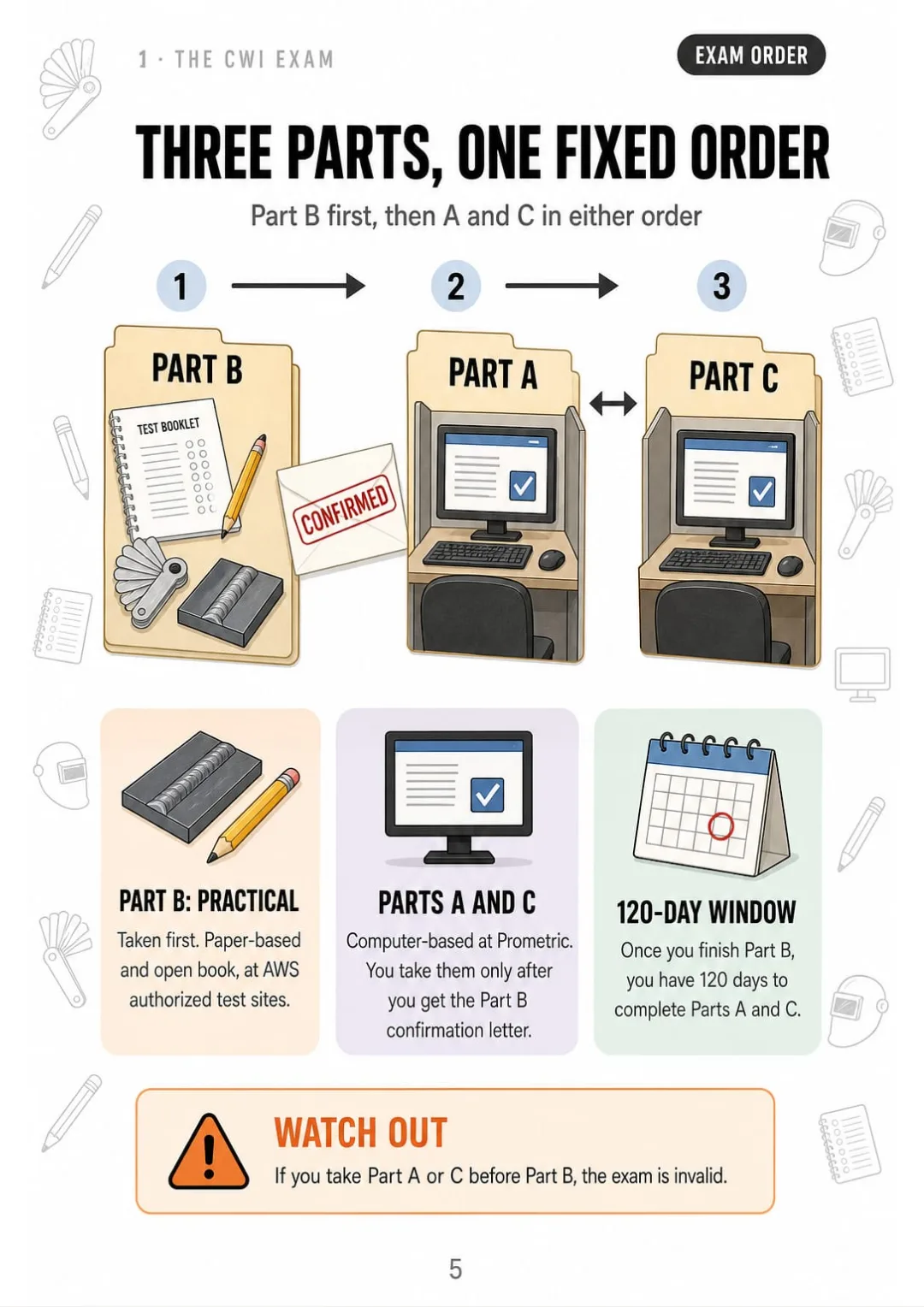
Part B on paper first, then A and C at Prometric within 120 days
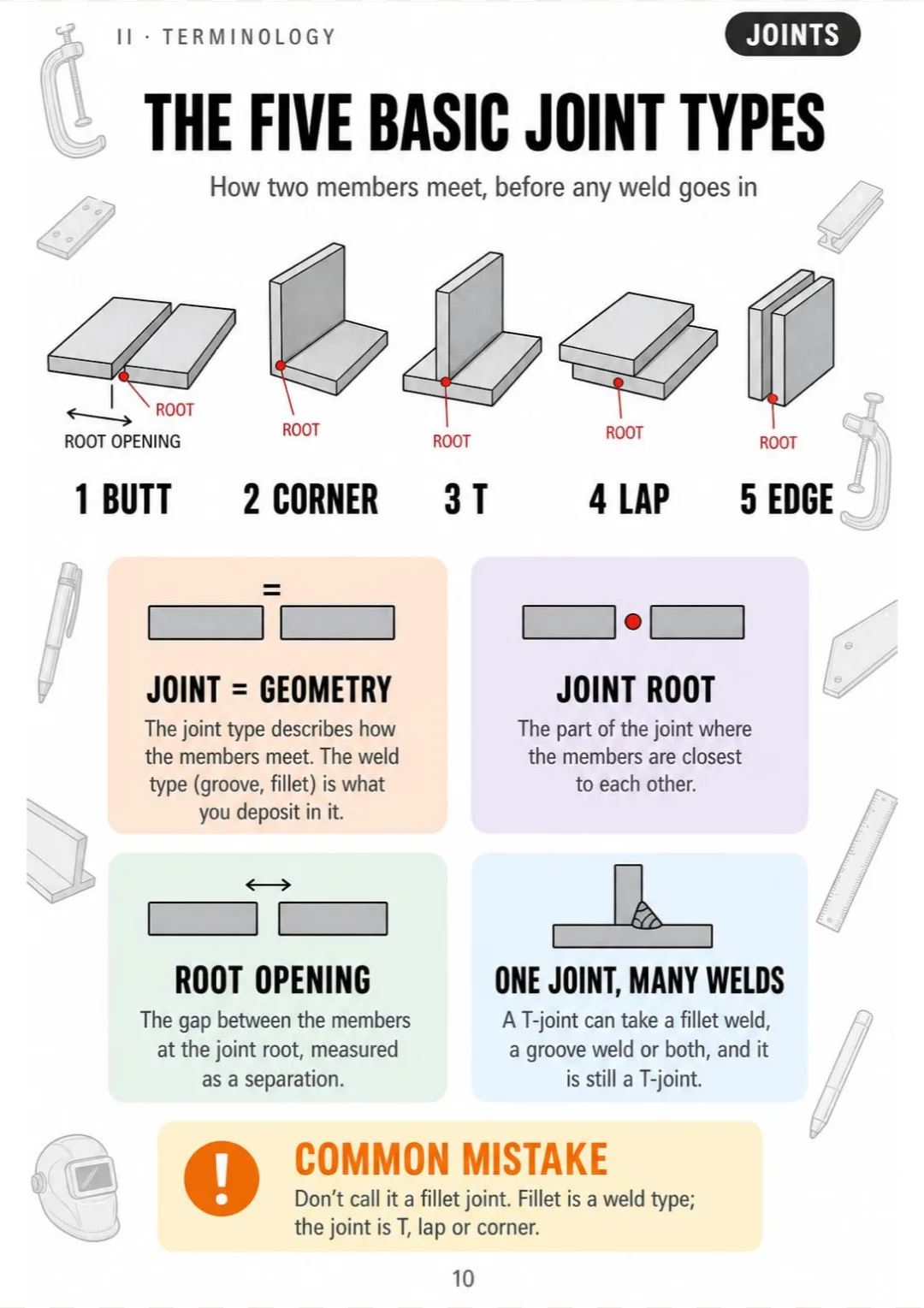
Butt, corner, T, lap and edge, each with its joint root marked in red
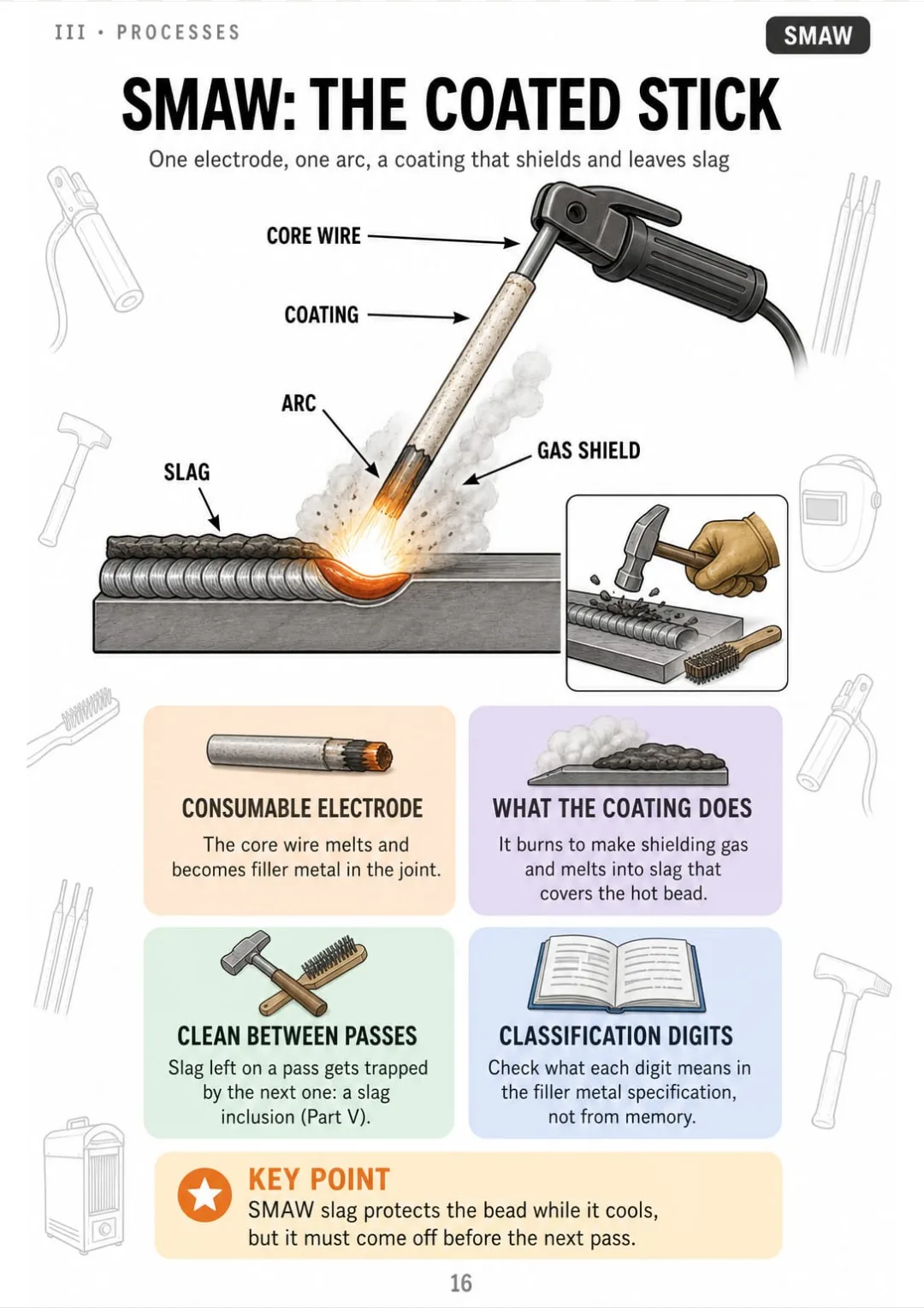
SMAW: the coating makes gas and slag, and slag left between passes becomes an inclusion
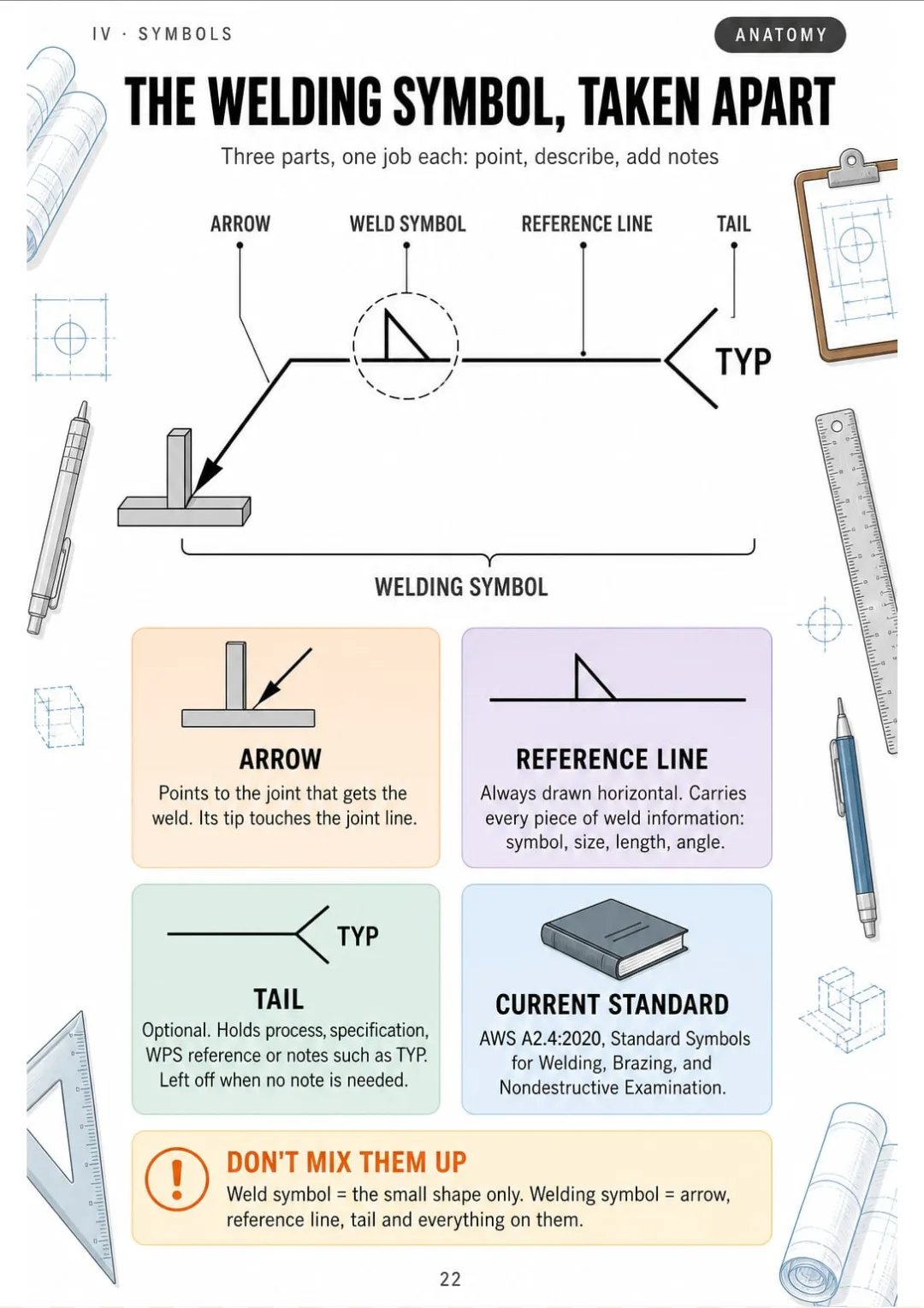
The welding symbol in three parts: arrow, reference line and tail, per AWS A2.4:2020
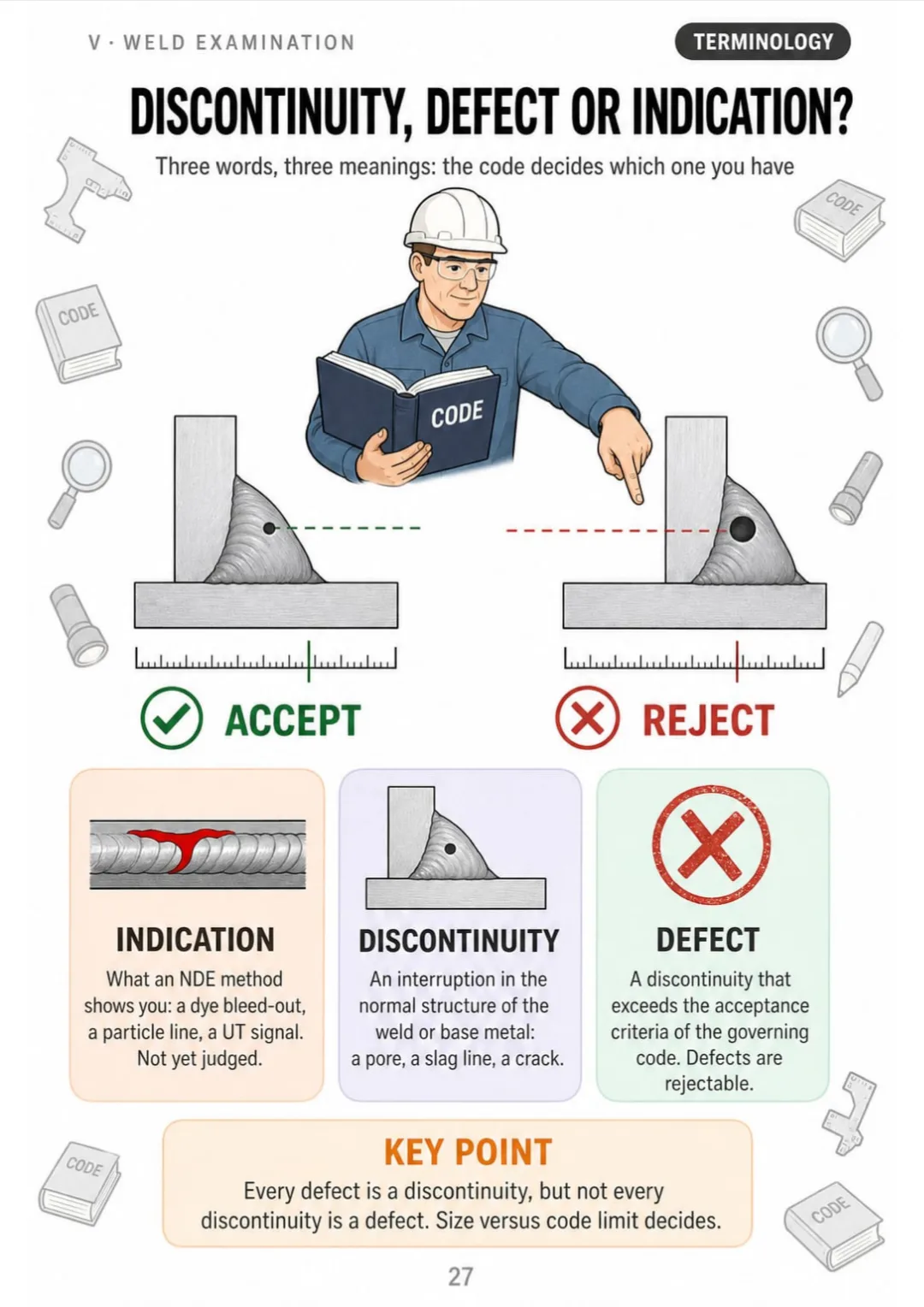
A discontinuity only becomes a defect once it goes past the code's acceptance criteria.
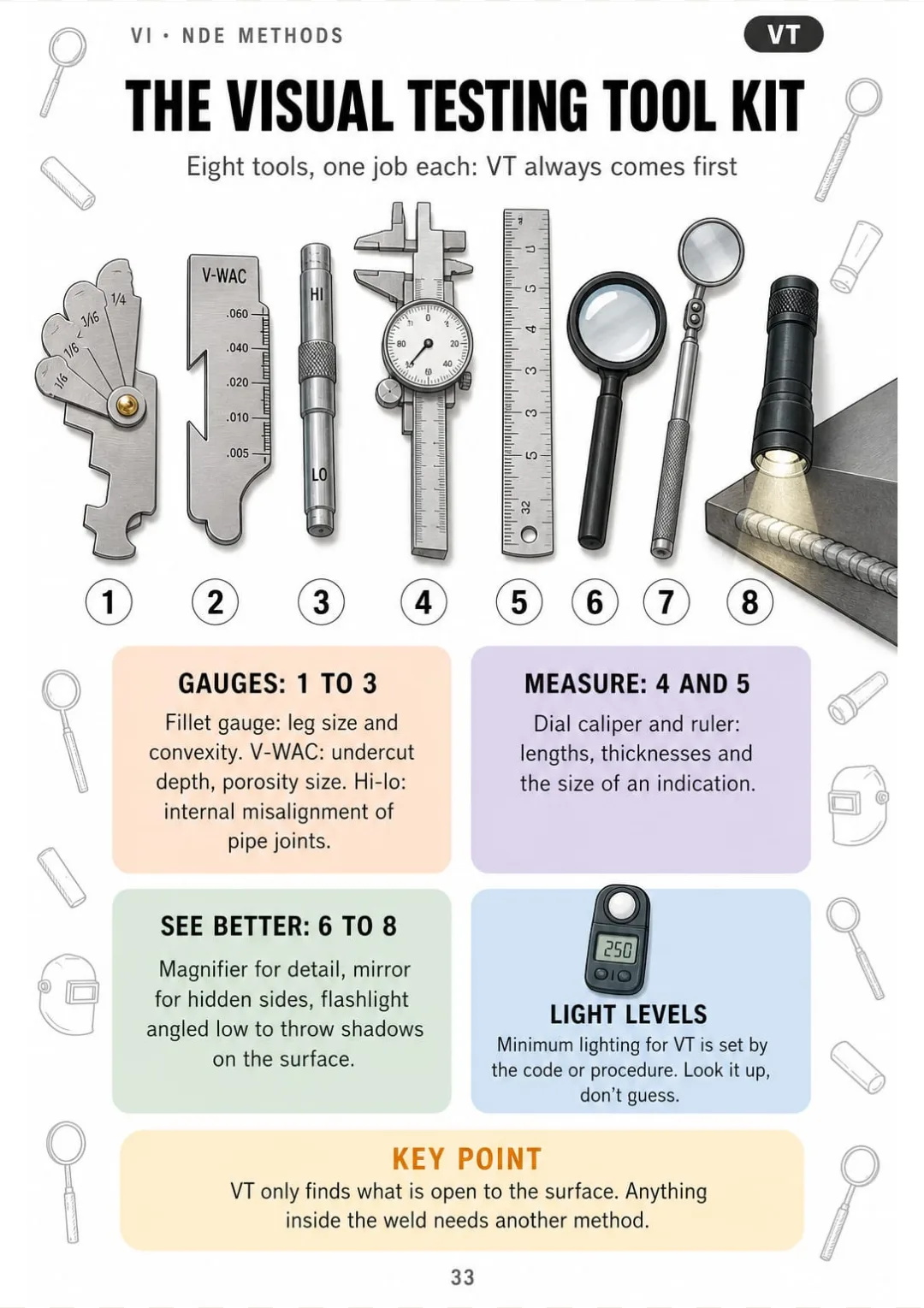
Fillet gauge, V-WAC, hi-lo, caliper, ruler, magnifier, mirror, flashlight: what each one measures.
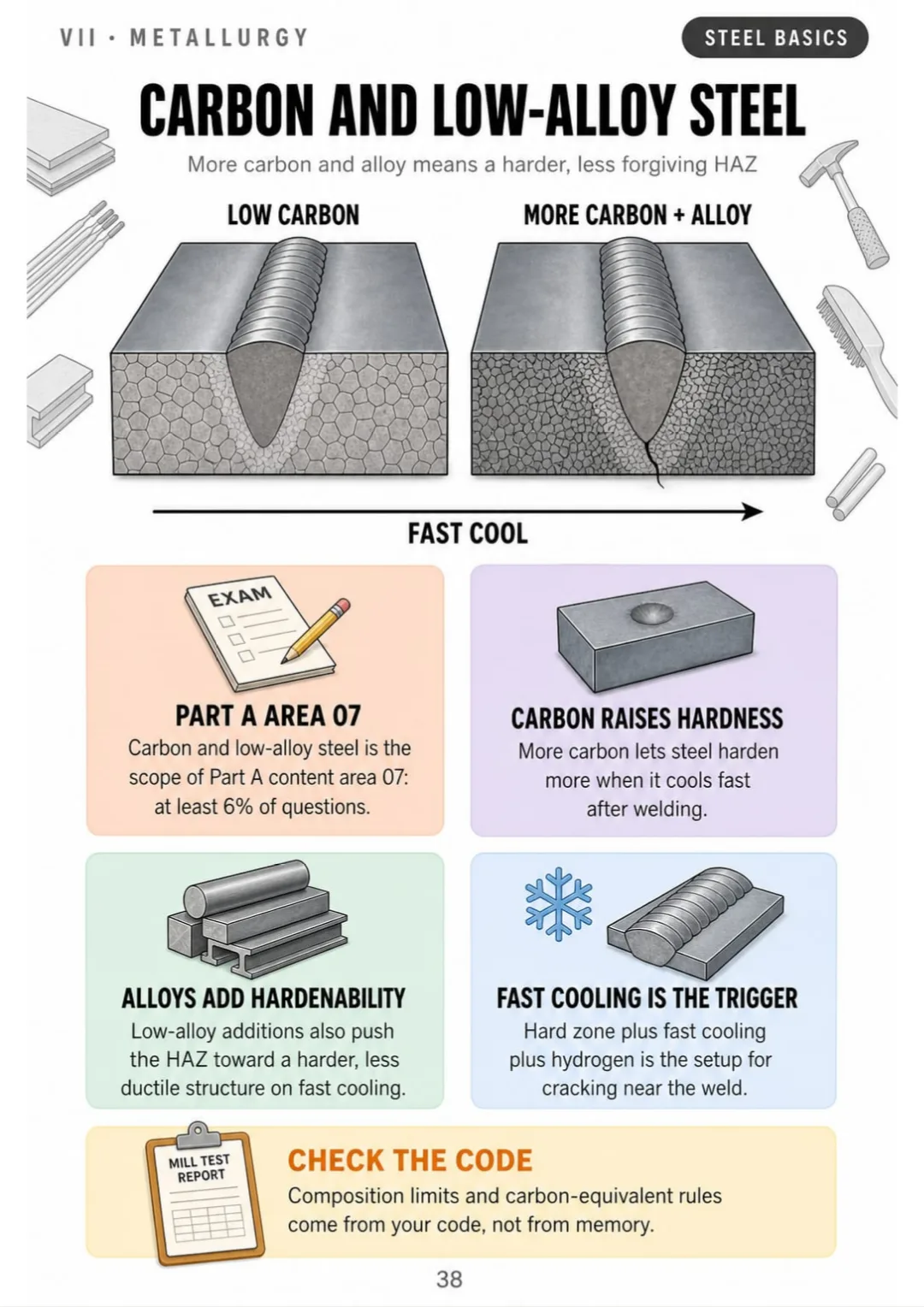
Carbon and alloy raise HAZ hardness on fast cooling: Part A area 07, at least 6%.
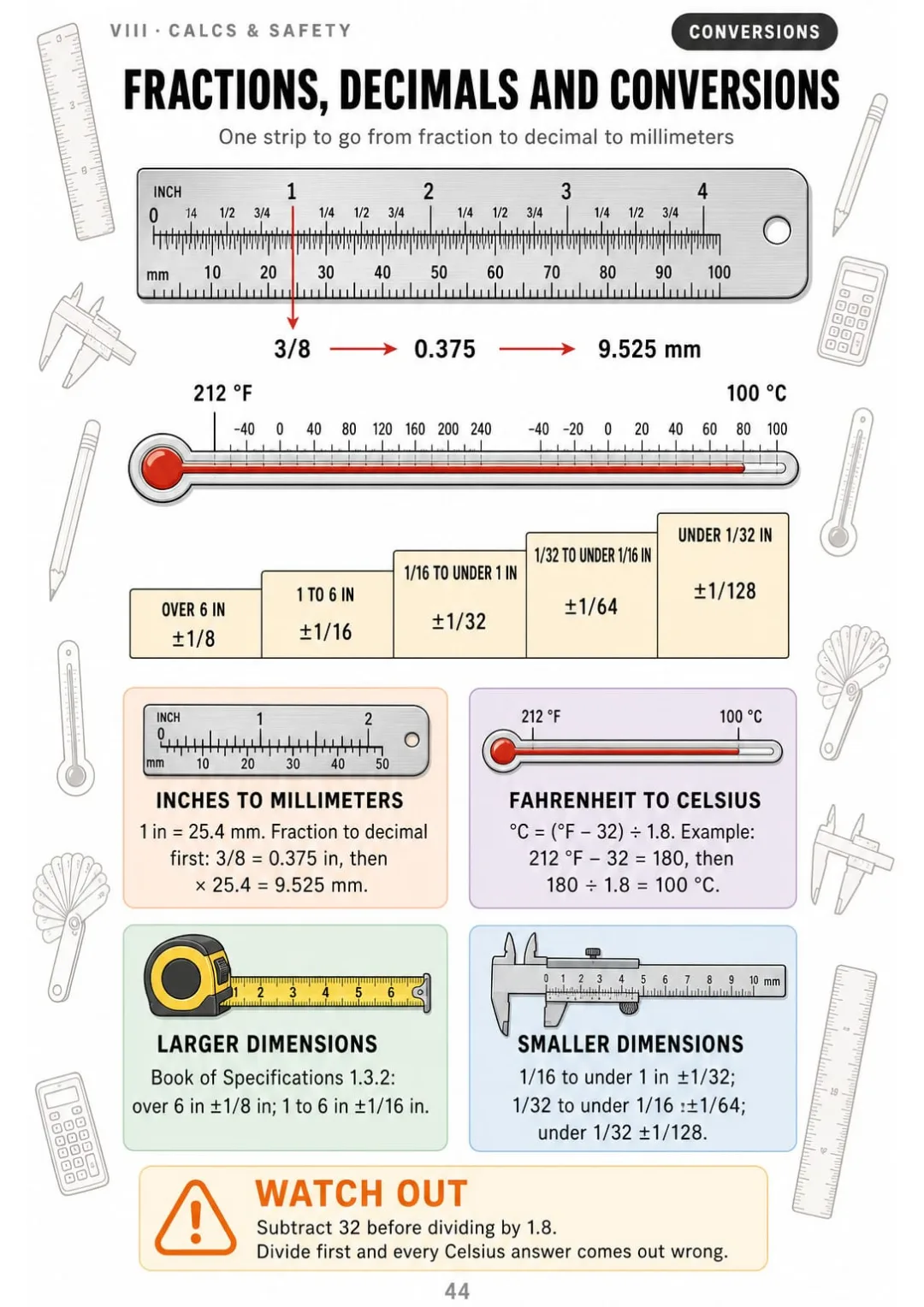
3/8 in = 0.375 in = 9.525 mm · 212 °F = 100 °C · tolerances from ±1/8 down to ±1/128

Swipe to see more →

These are real pages from the book. The table of contents is the full one: 11 parts and 61 topics.

It's Not That You Have a Bad Memory. It's That Nobody Put It in Order.

You've read the welding symbol chapter three times. You close the book...

...and the next morning you can't say if the weld goes on the arrow side or the other side. It was just a chart to memorize.

SMAW: the coating makes gas and slag, and slag left between passes becomes an inclusion

Here the welding symbol is one drawn page: arrow, reference line and tail, with arrow side below the line and other side above it.

And on the pages next door each piece gets its own: fillet and groove symbol dimensions, and NDE symbols with their test letters.

First you see why it works that way. Then the order sticks on its own.

SEE THE DIFFERENCE

Stop Memorizing Joints and Symbols You Can't Picture:

THIS
  • Pages and pages of tight text
  • Joints and symbols without a single drawing
  • On exam day, you don't know where to start
A joint is the junction of members, or the edges of members, that are to be joined. Five basic joint types are recognized. In a butt joint, the members lie approximately in the same plane. In corner and T-joints, they are located approximately at right angles to each other. A lap joint is formed between two overlapping members in parallel planes, and an edge joint joins the edges of two or more parallel members. The joint root is the portion of the joint where the members approach closest to each other.
FOR THIS
  • Every joint and symbol drawn
  • One topic per page, with the rules in boxes
  • You remember it because you've seen it
Butt, corner, T, lap and edge, each with its joint root marked in red
CONTENTS

Take a Look at the 11 Parts and 61 Topics

The exam, terminology, processes, symbols, discontinuities, NDE methods, metallurgy and tests, calculations and safety, WPS and qualification, Part B skills and Part C code application: 65 pages, all drawn

IThe CWI Exam · pp. 5-9
  1. How the Three-Part CWI Exam Works
  2. Part A Content Areas and Weights
  3. Eligibility, Vision Test and Fees
  4. Scoring, Retests and the CAWI Outcome
  5. Renewal and Nine-Year Recertification
IIDefinitions and Terminology · pp. 10-15
  1. Five Basic Joint Types and the Joint Root
  2. Parts of a Groove Weld
  3. Bevel Angle, Groove Angle and Root Face
  4. Parts of a Fillet Weld
  5. Fillet Weld Size and the Three Throats
  6. Welding Positions 1G-4G and 1F-4F
IIIWelding and Cutting Processes · pp. 16-21
  1. Shielded Metal Arc Welding (SMAW)
  2. Gas Metal and Flux Cored Arc Welding
  3. Gas Tungsten Arc Welding (GTAW)
  4. Submerged Arc Welding and Flux Types
  5. Oxyfuel Cutting
  6. Plasma and Air Carbon Arc Cutting
IVWelding and NDE Symbols · pp. 22-26
  1. Arrow, Reference Line and Tail
  2. Arrow Side vs Other Side
  3. Fillet Weld Symbol Dimensions
  4. Groove Weld Symbols and Sizes
  5. NDE Symbols and Test Letters
VWeld Examination and Discontinuities · pp. 27-32
  1. Discontinuity, Defect and Indication
  2. Porosity and Slag Inclusions
  3. Cracks and Where They Form
  4. Undercut, Overlap and Underfill
  5. Incomplete Fusion and Penetration
  6. Visual Inspection Before, During and After
VINondestructive Test Methods · pp. 33-37
  1. Visual Testing Tools and Lighting
  2. Liquid Penetrant Testing (PT)
  3. Magnetic Particle Testing (MT)
  4. Ultrasonic Testing (UT)
  5. Radiographic Testing (RT)
VIIMetallurgy, Heat Control and Destructive Tests · pp. 38-43
  1. Carbon and Low-Alloy Steel Basics
  2. The Heat-Affected Zone
  3. Preheat, Interpass Temperature and Heat Input
  4. Postweld Heat Treatment
  5. Tensile Test and Ultimate Strength
  6. Bend, Charpy and Hardness Tests
VIIICalculations, Safety and Inspector Duties · pp. 44-48
  1. Fractions, Decimals and Unit Conversions
  2. Area and Tensile Strength Math
  3. Fire Watch and Hot Work Safety
  4. Eye Protection and Filter Shades
  5. Duties and Ethics of the CWI
IXWPS, PQR and Welder Qualification · pp. 49-54
  1. What a WPS Must Contain
  2. The PQR and Essential Variables
  3. Welder Qualification Test Records (WQTR)
  4. Positions Qualified by Each Test
  5. A-Numbers, F-Numbers and M-Numbers
  6. Checking a WPS Against Its PQR
XPart B Practical Skills · pp. 55-59
  1. Inside the Part B Book of Specifications
  2. Measuring Replicas With Fillet Gauges
  3. Using the V-WAC, Hi-Lo Gauge and Caliper
  4. Judging Bend Specimens
  5. Applying Acceptance Criteria Step by Step
XIPart C Code Application and Final Review · pp. 60-65
  1. Choosing Your Part C Code Book
  2. Navigating a Code Such as AWS D1.1
  3. Qualification, Fabrication and Inspection Clauses
  4. Open-Book Search Strategy
  5. Frequent Mix-Ups
  6. Exam Day Checklist

What If Every Topic Fit on a Single Page?

Picture this:

Instead of rereading half a page on fillet weld throats without being able to see them...

...you open the page and find the fillet drawn in section, with the leg, face, root, toe and theoretical throat each labeled right where it sits.

A discontinuity only becomes a defect once it goes past the code's acceptance criteria.

And welding symbols, 1G-4G positions, discontinuities, NDE methods and Part B gauges turn into drawings and tables you read at a glance.

You stop memorizing and start understanding.

That's exactly what The CWI Exam Sketchbook does: 11 parts, 65 pages and 61 drawn topics, and at the end the frequent mix-ups and an exam day checklist. Because what you see in order, you remember.

Because what your brain sees organized, it remembers.

Here Is What You Get with The CWI Exam Sketchbook:

Ipp. 5-9

The CWI Exam

How the three parts work and in what order, the Part A content areas, eligibility and the vision test, scoring and retests, and renewal.

IIpp. 10-15

Definitions and Terminology

The five joint types and the joint root, parts of groove and fillet welds, bevel and groove angle, root face, the three throats and positions 1G-4G and 1F-4F.

IIIpp. 16-21

Welding and Cutting Processes

SMAW, GMAW and FCAW, GTAW, submerged arc and flux types, oxyfuel cutting, plasma and air carbon arc cutting.

IVpp. 22-26

Welding and NDE Symbols

Read any welding symbol in the same order: arrow, reference line and tail, arrow side vs other side, fillet and groove dimensions, and NDE symbols with their test letters.

Vpp. 27-32

Weld Examination and Discontinuities

Discontinuity, defect and indication, porosity and slag, cracks, undercut, overlap and underfill, incomplete fusion and penetration, and visual inspection before, during and after.

VIpp. 33-37

Nondestructive Test Methods

Visual testing tools and lighting, and how PT, MT, UT and RT work.

VIIpp. 38-43

Metallurgy, Heat Control and Destructive Tests

Carbon and low-alloy steel, the heat-affected zone, preheat, interpass and heat input, PWHT, and tensile, bend, Charpy and hardness tests.

VIIIpp. 44-48

Calculations, Safety and Inspector Duties

Fractions, decimals and conversions, area and tensile strength math worked step by step, fire watch and hot work, filter shades, and the CWI's duties and ethics.

IXpp. 49-54

WPS, PQR and Welder Qualification

What a WPS contains, the PQR and essential variables, the WQTR, positions qualified by each test, A-, F- and M-Numbers, and checking a WPS against its PQR.

Xpp. 55-59

Part B Practical Skills

Walk into Part B knowing each tool: what's inside the Book of Specifications, fillet gauge readings, the V-WAC, hi-lo gauge and caliper, bend specimens and acceptance criteria, step by step.

XIpp. 60-65

Part C Code Application and Final Review

Choosing your code book, navigating a code such as AWS D1.1, the main clauses, an open-book search routine, frequent mix-ups and an exam day checklist.

At the end of the book: The frequent mix-ups, an exam day checklist and an open-book search routine for Part C.
And That Is Not All: 2 More Books, Free

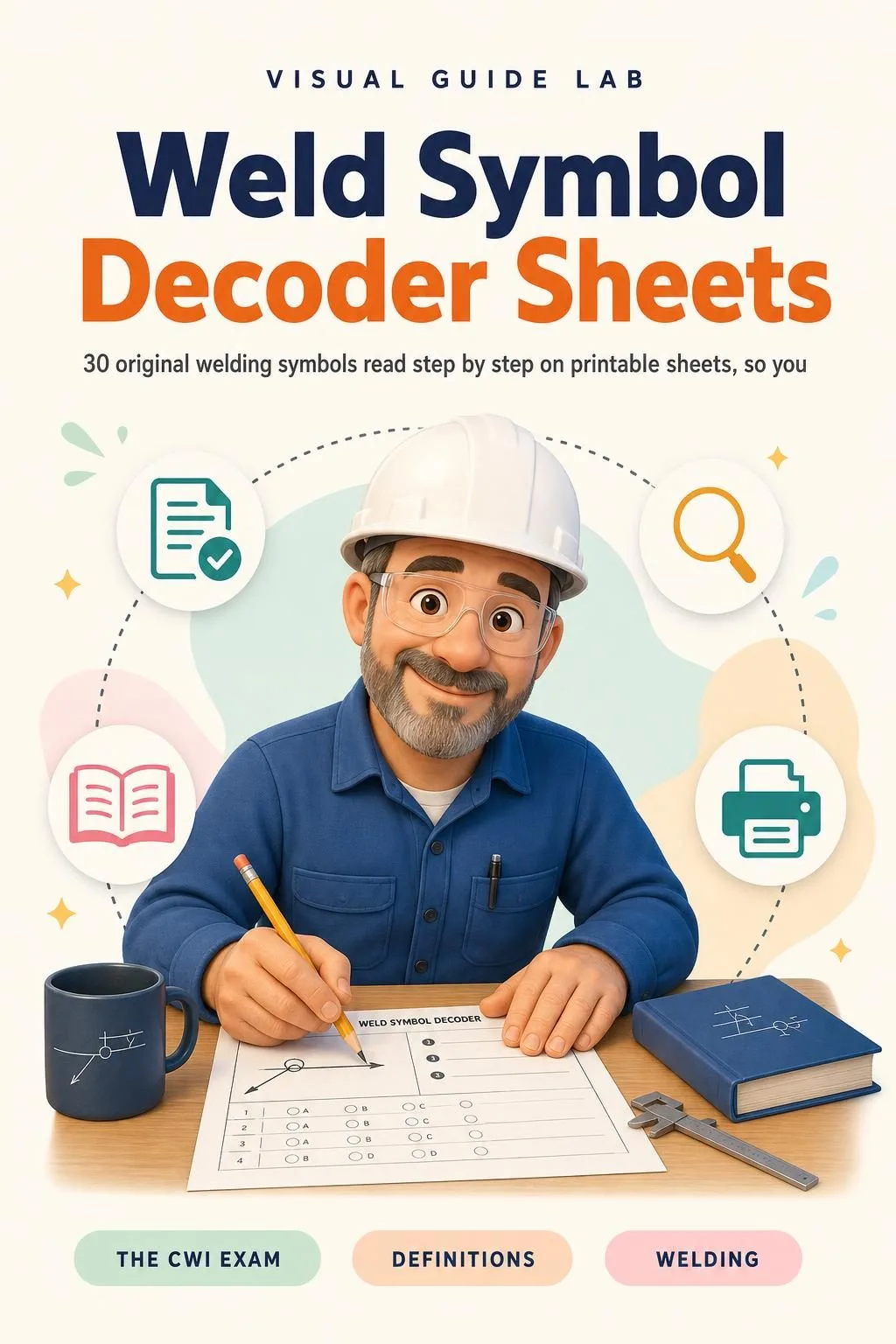
Weld Symbol Decoder Sheets

BONUS 1: «Weld Symbol Decoder Sheets»

Value on its own: US$ 17.90

30 original welding symbols read step by step on printable sheets, so you practice arrow side, other side, size, length and tail notes until you read them in the same order every time.

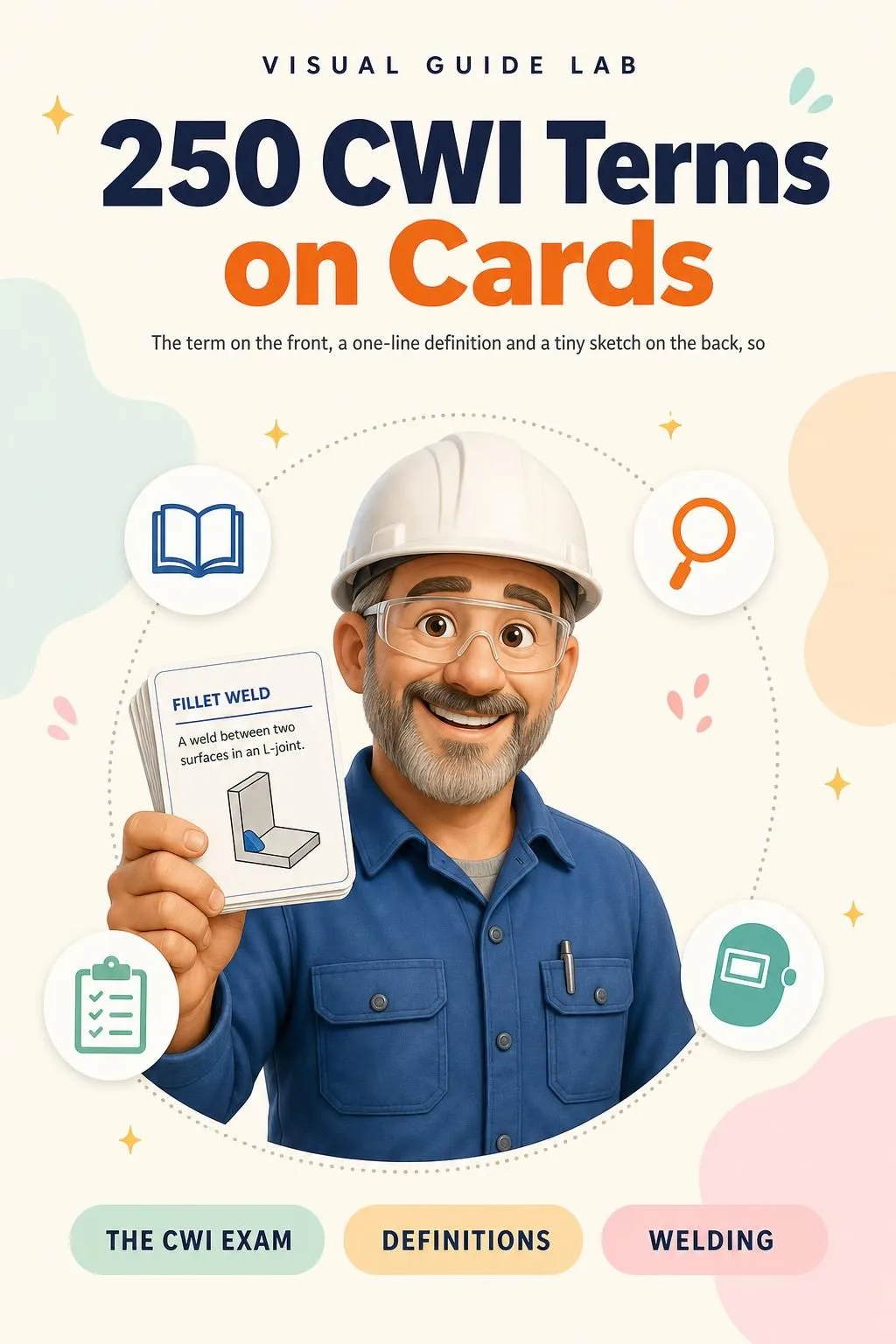
250 CWI Terms on Cards

BONUS 2: «250 CWI Terms on Cards»

Value on its own: US$ 14.90

The term on the front, a one-line definition and a tiny sketch on the back, so you review the terminology in short sessions and stop mixing up look-alike words.

The CWI Exam Sketchbook + 2 Free Books

  • The CWI Exam Sketchbook: 65 illustrated pagesUS$ 87
  • BONUS 1: Weld Symbol Decoder SheetsUS$ 17.90
  • BONUS 2: 250 CWI Terms on CardsUS$ 14.90
  • High-resolution PDF to printIncluded
Total value US$ 119.80
YOUR PRICE:
US$ 37
You save US$ 82.80
YES, I WANT THE CWI EXAM SKETCHBOOK FOR US$ 37

📄 This is a digital PDF book sent to your email: nothing is printed or shipped.

Secure purchaseEncrypted payment30-day guarantee

PDF by email: The CWI Exam Sketchbook reaches your inbox as a PDF, and the two free books come by email too. One-time payment, no installments or hidden costs.

Is This Book for You?

You're studying for the CWI

You're studying for the CWI

Every topic of Parts A, B and C on one drawn page, to review at night or on the weekend after a full shift.

Your exam dates are set

Your exam dates are set

Part B first, then A and C: the gauges, the Book of Specifications and an open-book search routine, in the order you'll face them.

You already work in welding, QA/QC or NDE

You already work in welding, QA/QC or NDE

A quick drawn review of what you see every day (symbols, discontinuities, WPS and PQR), laid out the way the exam asks for it.

To Sum Up: Here Is What You Get

US$ 119.80US$ 37
YES, I WANT THE CWI EXAM SKETCHBOOK FOR US$ 37

📄 This is a digital PDF book sent to your email: nothing is printed or shipped.

30DAYS
GUARANTEE

30-Day Guarantee

30-day guarantee: tell us what didn't work and we'll refund 100%.

You have 30 days to try The CWI Exam Sketchbook and the two bonus books. If it doesn't work for you, email us, tell us what didn't work and we'll refund 100% of what you paid. One-time payment, no subscription, no surprises.

Frequently Asked Questions

How do I get the material?

It's a high-resolution PDF sent by email, to the address you enter at checkout. Read it on your phone, tablet or computer, or print it. The two bonus books, Weld Symbol Decoder Sheets and 250 CWI Terms on Cards, come by email too.

Is it a monthly or a one-time payment?

One-time payment of US$ 37 for the book and the two bonus books. No installments, no subscription. The extra practice books shown at checkout are optional: you only pay for them if you add them.

Who is it for?

For welders moving into inspection, QA/QC staff, NDE techs going for the certification and anyone retaking a part of the CWI exam. It doesn't treat you like a beginner: it takes what you know from the shop and puts it in exam order. Check the table of contents above to see the topics.

What sources is it based on?

The AWS CWI exam information guides for Part A (Rev. 03.01.2024), Part B (Rev. 03.01.2024) and Part C (Rev. 02.11.2025), the AWS CWI User Guide, AWS QC1 and AWS B5.1 as published on aws.org, the Part B Book of Specifications (2017, U.S. Customary) and OSHA 29 CFR 1910.252 and 1910.133. Where a number depends on your code or on current exam rules, the page says “check the code” or “check the official exam guide.” For fees, check aws.org for current prices.

Is this official AWS material?

No. It's an independent drawn review of the exam topics. It is not affiliated with or endorsed by the American Welding Society, it doesn't reproduce codes, tables, the Book of Specifications or exam items, and it doesn't give you a certificate or count as seminar or training hours.

Does it replace my code book or a CWI seminar?

No. You still need the official AWS documents, the code book you choose for Part C, and your training and hands-on experience. The Part C pages use AWS D1.1 as the worked example; if you chose another code, such as API 1104, apply the same search routine to your own book. This book helps you review and organize what you study.

Are the exam-style questions the real exam questions?

No. Any exam-style questions in this material, including the optional Part A Practice Sets, are written for it and are not official questions from any exam. They're there so you can check what stuck.

Can I print it?

Yes. It's a high-resolution PDF: print the whole book or just the parts you need, and keep them in a binder at the shop.

What if I don't like it?

You have 30 days. Tell us what didn't work and we'll refund 100% of what you paid.

One Last Thing Before You Decide...

You don't have to reread the same page hoping it sticks this time.

You don't have to memorize joints and symbols you can't picture.

And you definitely don't have to walk into your exam not knowing where to start.

There's a simpler way. And it's one click away. Now it's your turn.

One-time payment: US$ 37 · Guarantee: 30 days · PDF by email

YES, I WANT THE CWI EXAM SKETCHBOOK FOR US$ 37

📄 This is a digital PDF book sent to your email: nothing is printed or shipped.